
Protection that reads as professional courtesy
Executives moving through Brazil rarely need the kind of security that announces itself. What they need is someone who already understands the room — the driver who knows the São Paulo commute by feel, the advance who has walked the Faria Lima entrance the day before, the colleague at the next table who happens to be watching the door.
Our team is drawn from U.S. federal and military protection backgrounds and partnered with senior Brazilian operators. They hold details the way your chief of staff holds a calendar — quietly, precisely, and with the same sense of where your attention should be. No tactical vests at the board table. No convoys at the restaurant. A presence you brief, not one that briefs for you.
The work that matters happens before the car arrives. A read of the neighbourhood your dinner is held in. A second route through traffic when the first one slows. A clean handoff between our team in São Paulo and the driver meeting you at Galeão. Most of the value of this service is what you never notice — the meeting that started on time, the airport you left without incident, the night that ended uneventfully.
What executives usually get wrong about security in Brazil
Four patterns we most often see when a new client first calls us.
Visible security sends the wrong signal
A heavy detail reads as fear. For the people you negotiate with, for the partners at the next table, and sometimes for the staff in your own company. The point of good protection is that the person across from you never notices it — only the composure of the person they are meeting.
The board will ask, eventually
After any serious incident — and often before — general counsel and the board want documented duty of care. That means written threat assessments, logged movement, and reporting your risk and audit committees can read without ambiguity. We put that on paper from day one, so the question never has to be asked in a hurry.
Corporate security rarely speaks Brazil
Most global security functions are excellent in the markets they know well. Brazil is not one of them. A São Paulo Wednesday evening, a route through Barra to a residence after dark, a Brasília protocol schedule — these read differently to someone who lives here than to a security director reviewing them from Houston or London. Our role is usually to be that local read, not to replace what already works.
The household sees what you don't
Drivers, assistants, housekeepers, school routes — these are where patterns are learned, and where most insider risk sits. We vet, brief, and quietly coordinate with the people already around you rather than layering a second household on top. Families feel it as less friction, not more.
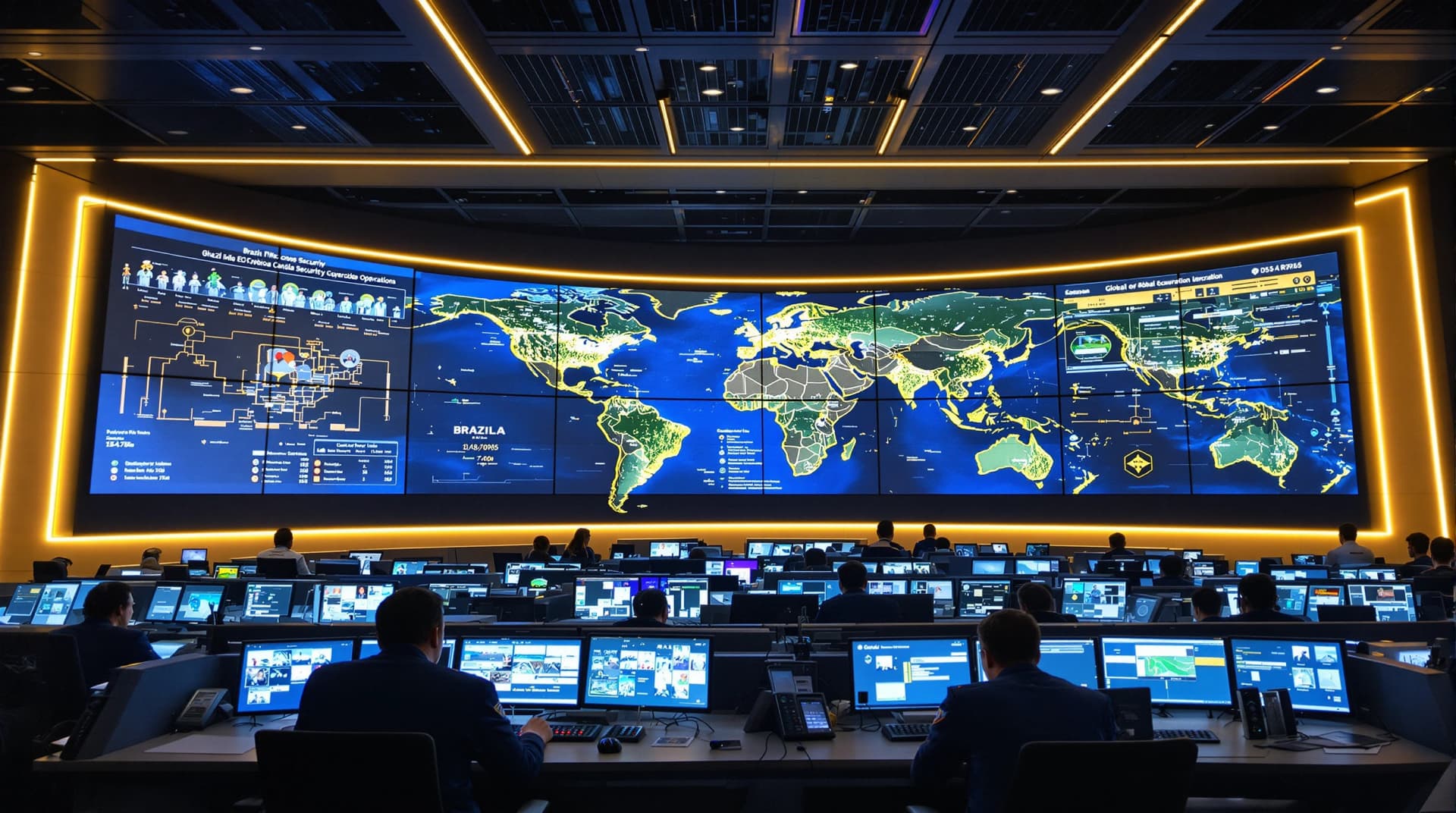
Instruments that support the work
Three pieces that sit behind the surface of the service.
Reporting your board can read
Communications held quietly
Continuity across borders
What we actually watch for in Brazil
Four patterns we brief our clients on before they arrive.
Financial exposure through PIX
Information that leaks from calendars
A public profile that is easier to read than you think
Movement patterns that repeat across cities
How the service is held
Four pieces of the same private standard of care.
Close cover that reads as staff
Protection officers who travel as part of your working team. They carry themselves the way senior operations staff do — earlier than you, quieter than you, and with the doors already known. In meetings they sit where a chief of staff would sit. On the street, they look like someone who belongs.
Transport held quietly
A small fleet of discreetly hardened sedans and SUVs, driven by senior operators we know personally. No flash, no logos, no convoy visuals. A second car is on hand only where the read calls for it — otherwise the service looks like a car and a driver, because that is what it should look like.
Travel, known in advance
From the day your itinerary is set, the trip is walked through by someone from our side. Hotels are visited in person. Drivers are briefed. The gap between your office in New York or London and the room in São Paulo is closed before you land.
Offices and residences, quietly made secure
For Brazil-based offices, residences, and short-term accommodations that need to host sensitive work. We assess, upgrade, and hand over — at a standard that reads as interior detail, not as a security system.

A multi-week engagement around a Brazilian market entry
Client: A chief executive, listed global company
Challenge: A chief executive with a recognisable public profile arrived in São Paulo for several weeks of negotiation meetings tied to a market-entry decision. The concern was not a specific threat. It was the accumulation of ordinary ones — media interest, counterparty scrutiny, a heavy travel schedule across three cities, and an assistant team used to London rather than Brazil.
Solution: Close cover was carried as staff. Transport was held in discreet sedans with senior drivers. Advance work was completed on each venue, hotel, and restaurant the day before. Reporting was prepared in the format used by the client's existing security director, so the engagement integrated cleanly rather than replacing what was already in place.
Results: Meetings began on time. The travel programme was completed without incident. The client's general counsel received a written record suitable for the board's duty-of-care file, and our team handed the brief back cleanly on departure.
What clients tell us, once the trip is over
Attributed on request. Held in confidence by default.
A chief executive
Energy sector
Engagement: several weeks, three cities
"What I appreciated most was that my team never had to think about security. The driver arrived when he was meant to. The room was ready when we got there. My chief of staff had one number to call, and every question was answered before I asked it. The service did exactly what good service is meant to do, which is disappear into the day."
A chief financial officer
Financial services
Engagement: investor roadshow, São Paulo
"We travel with a global security function already in place. Vanguard Attaché sat alongside it without friction — the reporting came back in the format we already use, the driver knew the city the way a senior colleague would, and our board received a duty-of-care record we could file without editing. That was the whole point of hiring them."
Years of experience
Senior team from federal and military protection backgrounds
English and Portuguese
Briefed and reported in the language your office works in
Operations desk
A single point of contact for the duration of the trip
On request
Direct introductions to clients at a similar level
How an engagement begins
A first conversation
A private call with the founder or a senior member of the team. We listen more than we speak.
30–45 minutes
A private brief
A short written assessment of the itinerary, the cities involved, and the points that deserve attention.
Within 48 hours
A named team
You are introduced to the lead officer, the senior driver, and the operations contact — by name.
Before departure
The work itself
The trip happens. At the end, a short written record is handed to the person you tell us to hand it to.
Duration of the trip
Challenges & Solutions
Challenge
A visible security detail reads as apprehension, even when the actual risk is modest.
Our Solution
Close cover carried as staff, the driver as a senior colleague, advance work held quietly.
Challenge
Travel between São Paulo, Rio, and Brasília reads differently in each city.
Our Solution
Local teams with a specific read of each city, coordinated through a single operations desk.
Challenge
The board will ask, eventually, for duty-of-care documentation.
Our Solution
A written assessment before the trip, a short after-action note, both in the format your risk committee already uses.
Why Trust Us
Protection careers
Senior team drawn from U.S. federal and military protection careers, partnered with experienced Brazilian operators. About the team.
Alongside your existing function
We sit alongside the corporate security function you already have, not in place of it. Reporting follows the format your office already uses.
The local read
Most of the value is in what we know here — the neighbourhood, the hour, the route — and it is delivered as part of the brief.
What holds the service together
Duty of care, in writing
A written assessment is on file before the trip. A short after-action note closes it. Both written for the general counsel or risk committee, without marketing language.
The household, quietly
Drivers, household staff, and the school run — we brief the people already around the family rather than layering a second household on top.
When something moves off plan
An operations desk answers at any hour, a senior driver is minutes away, and your office is briefed on the cadence you agreed, not before.
Discretion before technology
We use encrypted communications and room sweeps where the work calls for them. The care that matters is human: who knows, who speaks, who holds the door.
Who This Service Is For
Our services are tailored to meet the specific needs of different client profiles
Questions executives usually ask us first
Written plainly. If you need more detail on any of them, the first conversation is where we give it.
Will the protection be visible to the people I am meeting?
No. The team is briefed to read as staff — the driver, the advance, the colleague sitting where a chief of staff would sit. Protective presence is carried through composure and advance work, not through a visible detail. The people across from you should register that you are well staffed, not that you are well guarded.
How does this sit alongside our existing corporate security function?
Comfortably. For clients with an internal security director or a global provider, we act as the Brazil read inside that structure — not as a replacement for it. Reporting is written in the format your function already uses, briefings are shared with whoever you nominate, and the engagement closes cleanly when the trip ends.
What does the travel work actually involve?
Before arrival, our team walks the itinerary — the hotel, the offices, the restaurants, the routes between them — and prepares a written read. On arrival, your driver and advance officer are known to you by name. During the trip, someone from our operations desk is the single line of contact for your chief of staff. On departure, a short record is handed back to the person you tell us to hand it to.
Do you use armoured vehicles?
Where the threat picture calls for it, yes — discreetly hardened sedans and SUVs finished to look no different from the car you would usually be driven in. Most engagements do not need an armoured vehicle at all. The decision is part of the written brief, not a default.
What protection can you offer my family while I travel, or while they are in Brazil?
Household protection is carried quietly — school runs held by a driver who reads as household staff, residences reviewed rather than rebuilt, and a briefing for the people already around the family rather than a second layer imposed on top. The aim is less friction for the household, not more.
Who is actually on the team?
The senior team is drawn from U.S. federal and military protection backgrounds, partnered with experienced Brazilian operators who carry the local knowledge that makes the work possible. You are introduced to the lead officer, the senior driver, and the operations contact before you travel — by name, not by role title.
How is information held?
On a need-to-know basis, by default. Teams are compartmentalised, itineraries are not circulated wider than they need to be, and communications for the trip are held on encrypted channels. If your office has its own standards on this, we adapt to them rather than ask you to adapt to ours.
Will the board have what it needs for duty-of-care purposes?
Yes. A written threat assessment sits on file before the trip. A short after-action note closes it. Both are written in language a risk committee or general counsel can read quickly, and are formatted to sit cleanly alongside your existing corporate risk documentation.
Can we reference other clients?
On a discreet basis, yes. We do not publish client names. Where appropriate, we make direct introductions to clients who have used the service at a similar level and are willing to speak privately. Most of our new engagements arrive through exactly those conversations.
What does this cost?
Engagements are quoted privately against the trip. The variables are the length of the stay, the number of cities, the visibility profile, and whether the work includes household, office, or aviation coordination. A first conversation is the right place to move from generalities to a number.
What does the first conversation feel like?
Private, unhurried, and on the phone. Thirty to forty-five minutes is usually enough. We ask about the trip and the people around it. You ask whatever you need to. At the end, we either proceed to a written brief or we part cleanly. There is no follow-up pressure either way.
Related Services
Complementary solutions for complete executive protection
Close Protection
Specialized military methodology for executive physical protection.
Secure Transportation
Armored vehicles and trained drivers for executive transportation.
Risk Assessment
Complete threat and vulnerability analysis for executives.
Travel Security
Complete protection for domestic and international business travel.
Family Offices
Professional security coordination for family offices managing UHNW client travel.
Rapid Response
emergency deployment for crises and immediate risk situations.
Recommended Reading
Resources relevant to executives traveling to Brazil
Executive Protection Cost in Brazil
Complete cost and budgeting guide for executive protection in Brazil
GuideHow to Choose Executive Protection in Brazil
Step-by-step checklist for selecting professional executive protection in Brazil
Regional GuideSão Paulo Executive Security Guide
Security intelligence specific to executives in São Paulo
MethodologyThe 5 Levels of Executive Protection in Brazil
Which tier applies to your trip — from a vetted driver to a full detail
InsightLow-Profile Executive Protection in Brazil, Explained
When a discreet posture serves an executive better than a visible escort
GuideEvaluating the Best Executive Protection Firms in Brazil
A five-question diligence framework that goes beyond brand recognition
Request a Confidential Consultation
Our team of specialists is ready to assess your security needs