The two things that changed when the game moved from São Paulo to Rio
Brazil has hosted NFL regular-season football twice, both times in São Paulo. The Eagles beat the Packers 34–29 at Corinthians Arena on Friday 6 September 2024. It was the first NFL regular-season game ever played in South America, and the first Week 1 Friday game since 1970. The Chargers and Chiefs returned to the same building in 2025 and filled it to near capacity.
Corinthians Arena is a purpose-built 2014 World Cup venue in Itaquera, in São Paulo’s east zone. Attendance at the 2024 game was 47,236. It is self-contained, modern, designed around vehicle circulation, and, critically, the visitors it drew stayed in a business district and travelled a commuter axis to reach it.
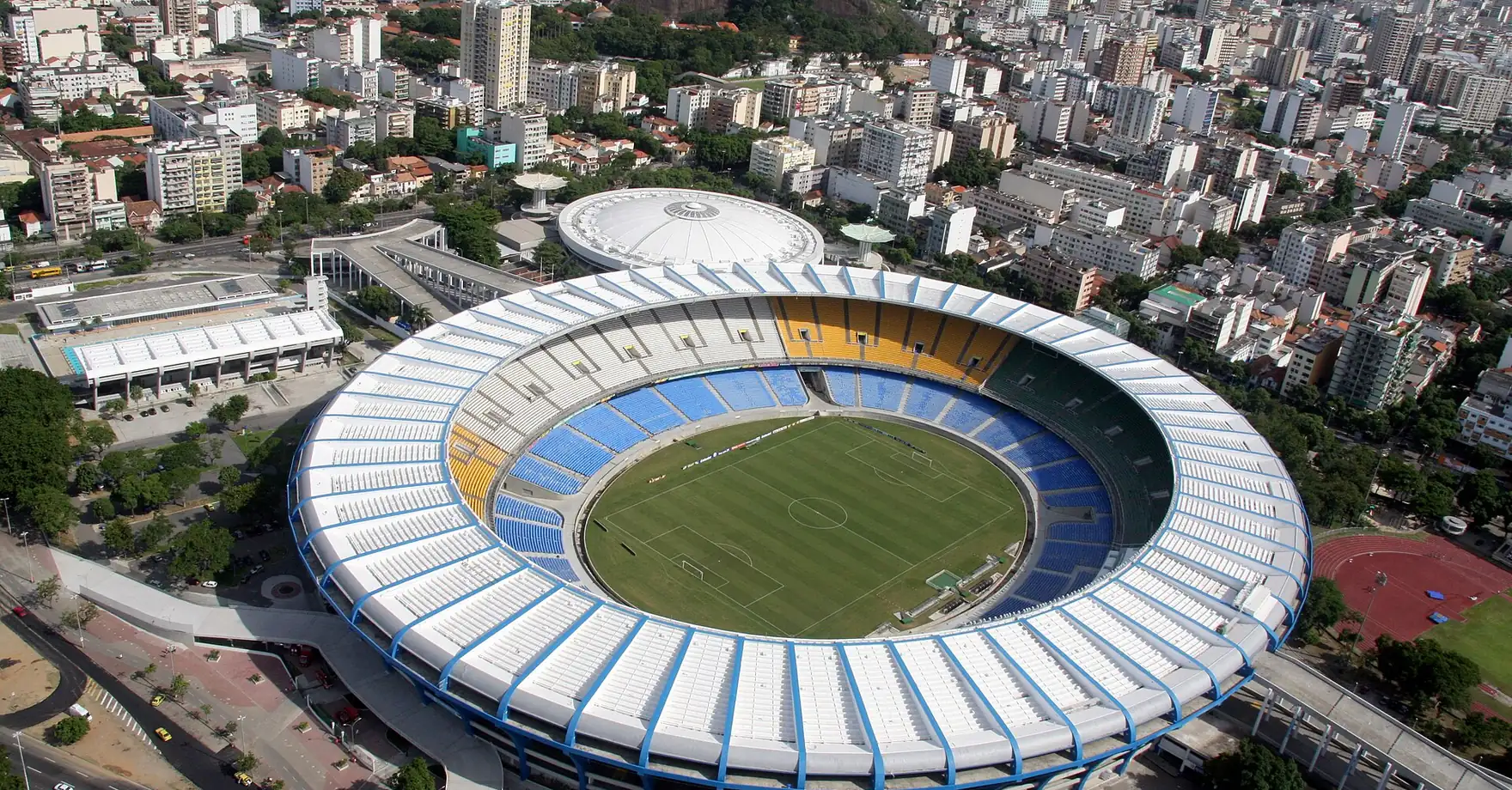
The Maracanã is a different proposition in every one of those respects. It opened in 1950. It holds nearly 79,000. And it sits inside a working residential neighborhood, woven into the surrounding streets rather than set apart from them.
São Paulo — built for circulation
The crowd disperses across an apron designed to take it.
Rio — built into a neighborhood
The crowd disperses into the streets people live on.
So the honest way to describe what the NFL did is not “moved to a bigger stadium.” It moved a roughly 67% larger single-event footprint into a venue where the crowd disperses into neighborhood streets instead of a purpose-built circulation ring, and it did so while committing to a minimum of three regular-season games in Rio over five years. That is not a league testing a market. That is a league that already ran the test twice and is now scaling.
If you are responsible for someone attending, the operational consequence is specific: the plan that worked in São Paulo does not port.
“The NFL didn’t just book a bigger stadium. It changed the movement problem.”
The kickoff time is the whole plan
Kickoff is 4:25 p.m. Eastern. Brazil does not observe daylight saving time, so that is 17:25 in Rio. Sunset in Rio in late September falls just before 6 p.m.
Run the arithmetic that matters: the game starts in daylight, the second half is played in the dark, and egress, all of it, happens at night.
The event window, in Rio local time
We know this is exactly where visitors get it wrong, because we watched it happen five weeks ago. On 24 July, on the public Rio supporter forums we monitor, a foreign visitor was planning his transfer home from a Maracanã fixture around what he assumed was a night kickoff and a dark walk from the metro. When we verified the fixture against the CBF’s own published designations, the kickoff was 17h30 on a Saturday. The match ended around 19h20, at dusk, not late at night. He had built his entire transfer plan on an assumed kickoff time rather than the published one.
For the NFL game, the error runs the other direction, and it is more expensive. A visitor reading “4:25 p.m.” on a US schedule and mentally filing it as an afternoon game will plan an afternoon egress. The whistle blows in the dark.
Check the published kickoff, convert it to local time, and build the departure plan backwards from the whistle. Most of what goes wrong on an event night is decided before anyone leaves the hotel.
Getting in is the harder half
Almost every security conversation about a big match is about leaving. The part that actually ruins a visitor’s night happens earlier: the ticket he bought may not open the turnstile for him.
Brazil’s General Sports Law (Lei nº 14.597/2023, article 148) requires turnstile image monitoring and biometric identification for access to sports arenas with capacity above 20,000 people. The rule has been in force since 14 June 2025. The Maracanã holds nearly 79,000, so this is not a borderline case: the face is the ticket.
Enrolment does not happen at the gate. It is a one-time prior registration on a platform, with photographs of an identity document. And that is exactly where the foreign buyer stalls: the form expects a CPF, Brazil’s individual taxpayer number, and a foreign passport does not carry one. Some platforms expose a passport field; others do not.
We know this because we have already had to fix it. A client asked us to arrange VIP seats at a Rio match. Arranging the seats was the easy part. Clearing him through facial enrolment was not: we ended up dealing directly with the hospitality provider and walking the client through registration ourselves. It could probably have been sorted out at the venue on the day. It would not have been quick, and it is not something you sort out standing in a queue.
What we cannot tell you is how this will work on 27 September. No enrolment path specific to passport holders without a CPF has been published for this game. A league selling to a largely American audience has an obvious reason to fix that, and may well have fixed it. Plan as though it has not been, and check in August.
Here is why it lands harder on an NFL crowd than on a Brazilian football crowd. A local supporter enrolled once, years ago, and forgot about it; he has had a CPF since childhood. A US fan buying for a single game has no prior registration, no CPF, no reason to expect anyone to ask for one, and no fallback. The failure does not surface until he is standing at the gate with 79,000 people behind him.
The confusion is not confined to foreigners. On the public Rio supporter forums we monitor, a Brazilian buyer reported on 29 July 2026 that one ticketing platform required facial enrolment and another, in the same competition, asked for nothing, leaving him unsure whether he would clear the turnstile. If a local supporter cannot say for certain, a visitor has no chance.
A biometric-enrolment check belongs in the advance work, weeks before the trip, not on match day. It is a fifteen-minute task in August and an unrecoverable problem in September. That is the access half of the job, and it is the half that decides whether the ticket is worth anything.
Why the last ten minutes are the risk, and the stadium is not
Inside the Maracanã on game day there will be a large, coordinated public-security posture. That is the well-resourced part of the evening, and it is not where a principal’s exposure sits.
Exposure sits in egress. Nearly 79,000 people leave at once, on foot, into surrounding streets, in the dark. Rideshare pricing surges, driver availability collapses at exactly the moment demand peaks, and the pickup ring immediately around the stadium becomes a slow-moving crush of vehicles that cannot reach the people summoning them. The realistic wait to be collected from inside that ring runs to thirty or forty minutes, spent standing on a street, at night, visibly foreign, holding a phone.
The phone is the point. Rio’s realistic risk profile for a visitor is not the dramatic one; it is opportunistic phone theft against someone stationary, distracted, and obviously out-of-town. Every minute in the pickup ring is a minute in that posture. We have written separately about how phone-theft modality has evolved in Brazil.
This is the part that does not port from São Paulo, and it is the part that a vehicle alone does not solve. Booking a car does not help if the car cannot reach you.
What actually moves a principal out of the Maracanã
The protocol is not complicated. It is just decided in advance rather than at the whistle.
- The egress gate is assigned in the advance, not chosen in the moment. Which exit your principal uses is determined before match day against the seat location and the pedestrian flow it feeds into, not by following the crowd.
- The pickup point sits off the stadium ring, not in it. The vehicle stages at a standoff point on a road that is still moving, and the walk between the assigned gate and that point is a short, defined, pre-walked leg. You are trading two minutes of walking for thirty minutes of standing.
- The departure window is decided before kickoff. For most principals, the answer is a clean exit before the two-minute warning against a stadium that will not have emptied yet, not a heroic post-whistle extraction. The people who leave with everyone else are the people who wait with everyone else.
- The route back to Zona Sul is read the day of, not the week before. The Maracanã sits in Zona Norte; the hotel belt sits in Zona Sul; the connection between them runs through a small number of tunnels and arterials that every other visitor will use at the same hour. Our Rio movement desk runs a standing two-touch corridor pre-confirm, first against our closed Rio operator group and then against the road as it is that hour, before a principal leaves the hotel, and it holds same-day reroute authority so the route can change without anyone having to ask.
The access outcome, both halves of it: your principal walks through the turnstile on a face that was enrolled in August rather than argued about at the gate, sits where the weekend is actually worth watching from, and is moving toward Zona Sul inside the first twenty minutes after the whistle instead of standing in the ring with everyone else. Opening the door and protecting the movement through it are the same job. Booking a car is neither.
That is the difference between a car booking and an operation.
“Booking a car does not help if the car cannot reach you.”
Book the ground before you book anything else
Rio’s armored inventory and low-profile detail are finite, and an NFL game weekend will draw against the same pool as every corporate group, sponsor delegation, and hospitality operator in the city, plus a Rio calendar that is already dense in September.
When you read “we will arrange an armored vehicle,” you picture a local dispatch: a car that exists in Rio, sitting in Rio, that turns up. That is the assumption worth correcting. At an event this size the local pool is spoken for early, vendors end up competing with each other for the same suitable vehicles, and the higher-profile ones are the hardest to source. More often than you would expect, the vehicle that covers the job is not sourced in Rio at all. It comes up from São Paulo, or goes the other way. That is not a phone call and a dispatch. It is a vehicle on the road between two states before it ever reaches your principal.
The lead time is not us being precious. It is the physical time that sourcing takes.
There is a neighbouring assumption worth correcting too: that the plan begins when the principal reaches the hotel. For this fixture, a meaningful share of visitors will land at Galeão on the Saturday, or on the Sunday itself, and go more or less straight to the stadium.
That schedule removes the two things this briefing turns on. Facial enrolment is not a same-day task; it is a registration completed in advance, against a form that expects a Brazilian taxpayer number a foreign passport does not carry. And an exit gate cannot be assigned in an advance that has not happened yet, nor can a staging point be walked by someone who has not been there. A same-day arrival does not make the movement harder in the abstract. It removes the window in which the two decisions that matter get made.
Lock vehicles and detail five-plus weeks out. Bookings that come in the week of the game are choosing from what is left. If you are hosting suite guests or moving a corporate group, that lead time is longer, not shorter, because the plan has to account for people arriving on different flights and staying in different hotels.
Do the biometric enrolment check now. Confirm the kickoff time in local terms. Decide the departure window before you decide anything else about the evening.
The game is the easy part.
Ready to Secure Your Brazil Trip?
Complete our security assessment to receive a custom protection plan built around your itinerary, your destinations, your risk profile and your travel dates.