What happened
If you have a principal moving cross-bay in Greater Rio this quarter, the route hierarchy just shifted. Here’s why.
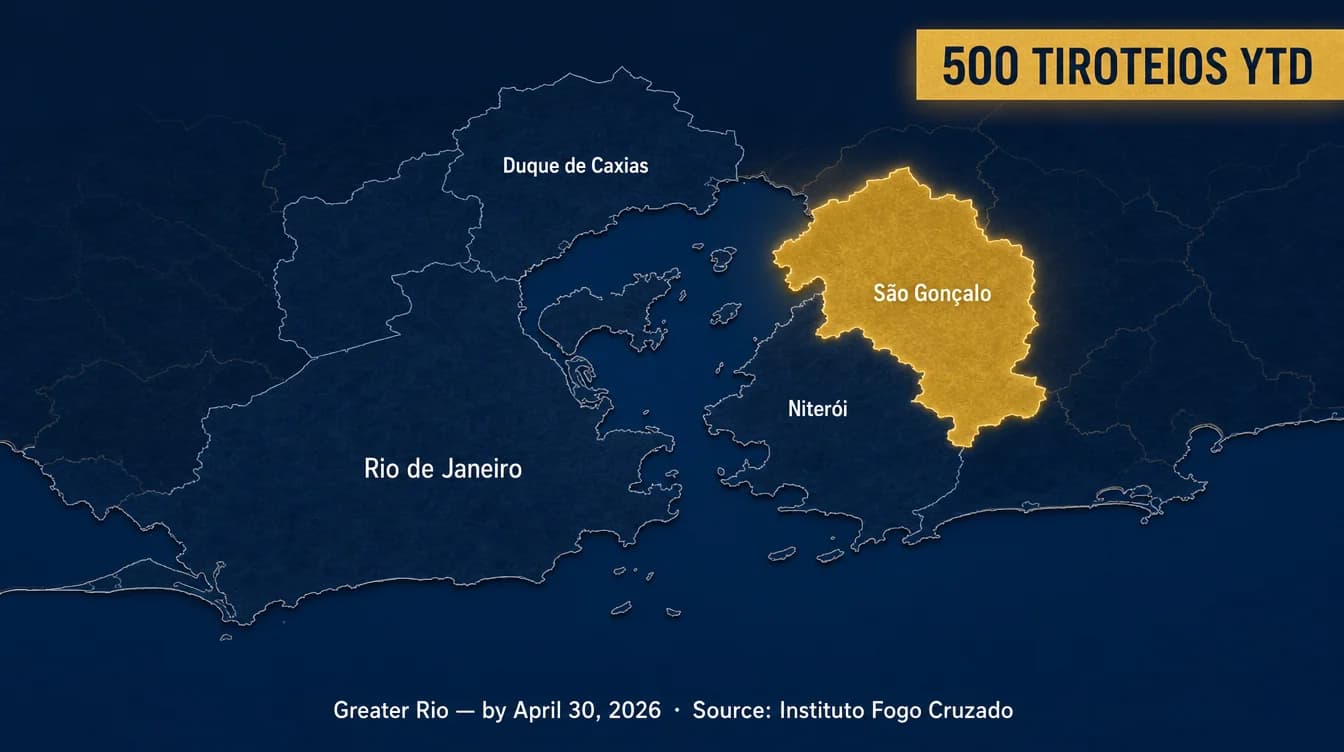
On April 30, the PM’s operation against a CV-aligned trafficker known as "Rabicó" in Complexo do Salgueiro (São Gonçalo) was registered by Instituto Fogo Cruzado as the 500th tiroteio of 2026 in Greater Rio. A 57-year-old resident of Luiz Caçador was shot while driving past the operation. Reference incident: rj-2026-04-30-0001.
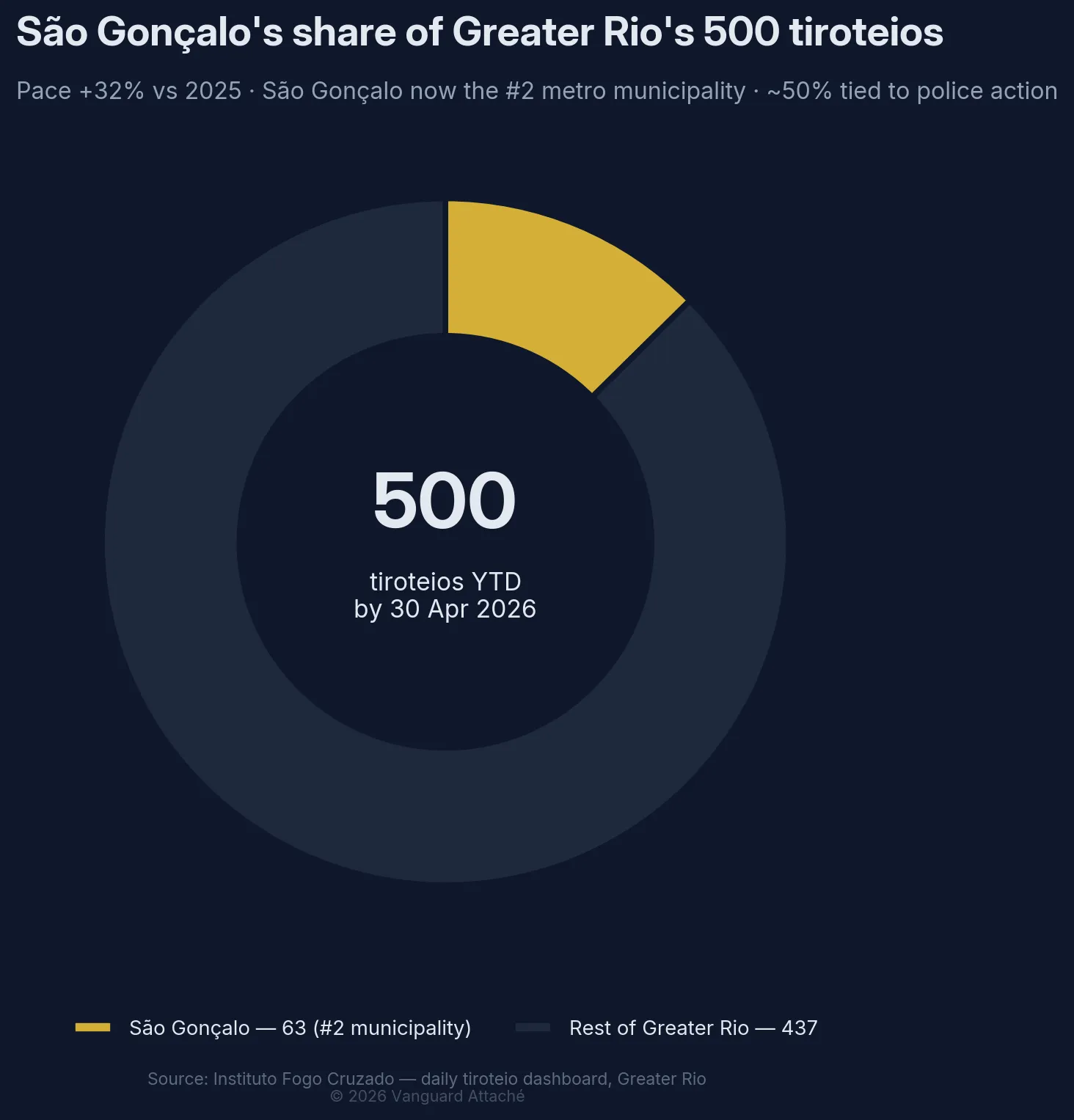
The pace itself is the story. 500 by April 30 is roughly 32% above the same window in 2025. Roughly half of the tracked tiroteios are tied to police actions — a ratio that has been stable across recent quarters and that holds operational meaning for travel planning, not just policy debate.
The São Gonçalo shift
The single most under-reported shift inside the 500 number: São Gonçalo is now the #2 tiroteio municipality in the metro region, with 63 events year-to-date. It used to sit further down the list. The rise reshapes the risk weight on the Niterói–São Gonçalo axis specifically — RJ-104, the BR-101 north exit, and ferry approaches that any client doing cross-bay business has to think about.
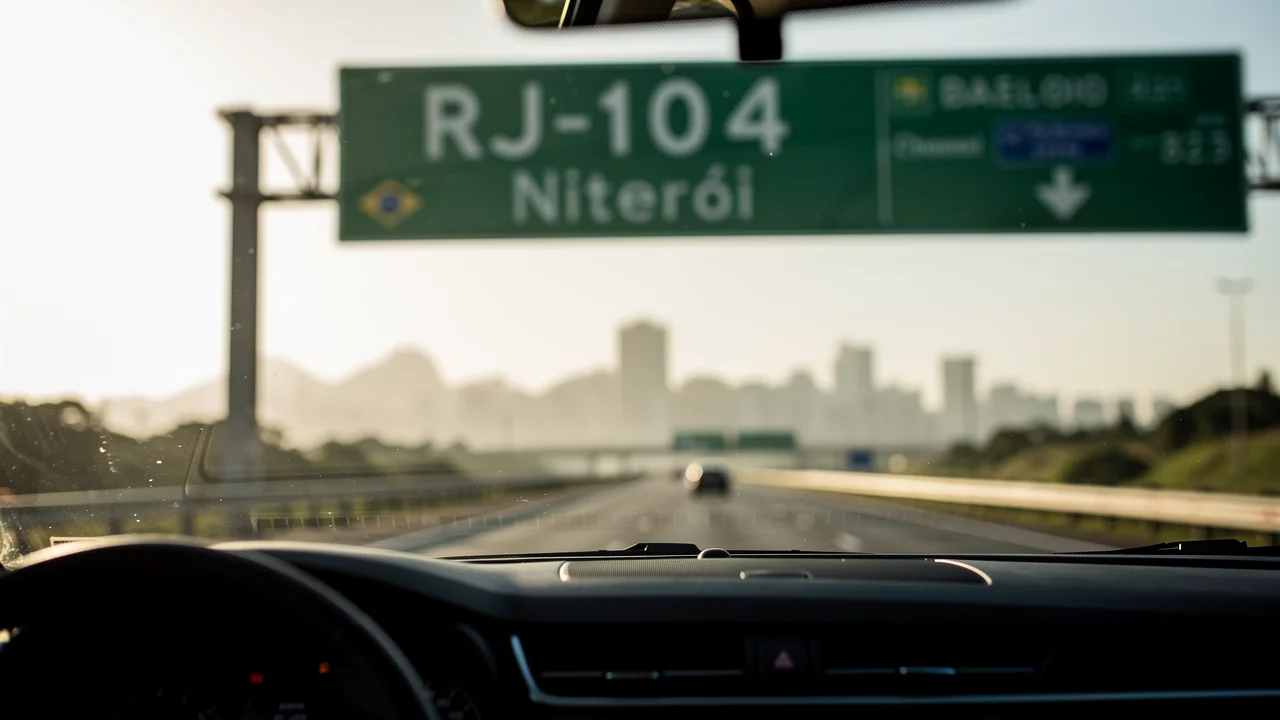
This is *not* the standard "favelas are dangerous" framing. The cross-bay axis matters for a particular kind of trip: a principal in Centro/Zona Sul who needs a same-day Niterói meeting, or an FBO movement out of Jacarepaguá that wants to avoid Linha Vermelha congestion via the bridge. Those trips now run adjacent to a municipality whose shooting count has climbed materially in 12 months.
How cross-bay routing should change for principals through June
The blanket avoidance of Penha / Complexo do Alemão still stands. What changed after the late-April read:
- Cross-bay preference shifted toward ferry + Centro routing over Salgueiro adjacencies for any movement that would otherwise touch the São Gonçalo east/north quadrant.
- Linha Vermelha at Penha is now flagged in any movement plan — not because it became materially more dangerous in the past two weeks (it didn’t), but because the late-April trend read corroborates the standing post-Operação Contenção non-normalization read at six months out.
- Niterói–SG axis trips: treat as elevated friction, not as no-go. Brief drivers on RJ-104 alternates and confirm the ferry slot before committing.

Why the year-end number is the wrong number to wait for
A pace number tells you something the year-end total can’t: how quickly the city is producing the data you’ll plan around. 500 by April 30 means the next 500 land before late August on current pace — well inside the planning window for any winter or Q3 trip. By the time the year-end coverage is published in January, the operational picture you needed it for is six months gone.
Fogo Cruzado’s daily cadence is what makes this trackable. The dashboard updates in something close to real time and is the cleanest single source for shooting-incident pace in Greater Rio. Any planner ignoring it in favor of "is Rio safe" listicles is using the wrong instrument.