How Do You Travel to Brazil Safely?
Navigating Brazil Security: A Data-Driven Perspective
The US State Department rates Brazil at Level 2, Exercise Increased Caution, the same tier it assigns France, the United Kingdom, and Italy. That rating is accurate and it is also close to useless on its own, because a single national grade averages a country where the risk on one block does not resemble the risk six blocks later.
This guide provides an evidence-based framework for evaluating your risk exposure, understanding Brazil's security landscape, and making informed decisions about professional protection. Unlike generic travel advice that paints all of Brazil with the same brush, we analyze data from 50+ authoritative sources to offer nuanced guidance for executive and VIP travelers.
Quick Answer: Do I Need Security in Brazil?
The answer depends on three interconnected factors: your profile, your activities, and your locations.
Low Risk Profile:
- Routine 1-2 day business travel to São Paulo's Faria Lima/Jardins or Rio's Zona Sul
- Low-visibility profile with no public exposure
- Hotel-to-office-to-hotel itinerary with limited external exposure
- Recommendation: Enhanced situational awareness + intelligence briefing
Medium Risk Profile:
- 3-7 day stays with predictable daily patterns
- C-suite or senior executive title
- Multiple external engagements or moderate public exposure
- Recommendation: Professional protection recommended; complimentary threat assessment advised
High Risk Profile:
- Extended stays (7+ days) or frequent return visits
- High-net-worth individual ($10M+ or Fortune 500 board level)
- Public figure or media exposure
- Recommendation: Executive protection strongly advised; comprehensive security planning required
Brazil's Security Paradox: Statistics vs. Perception
Crime rates are at decade lows, yet perception of insecurity is rising
Brazil's homicide rate dropped to 18.21 per 100,000 residents in 2023—the lowest since 2013. Yet national surveys show 2 in 3 Brazilians fear walking alone at night, an 18% increase from 2019. This paradox—improving objective security amid rising public anxiety—reflects evolving crime dynamics that disproportionately affect high-value travelers.
Geographic Risk Matrix: Where Data Meets Reality
Not all Brazilian cities present equal risk. Our analysis of official crime data reveals significant geographic variation:
São Paulo
- Faria Lima/Jardins: Relatively safe daytime, heightened evening attention
- GRU airport transfers: Armored vehicle recommended (28km route through varied areas)
- Express kidnappings: 2,437 cases in 2023 (89% resolved in <6 hours)
Rio de Janeiro
- Zona Sul (Copacabana/Ipanema/Leblon): Professional protection recommended
- GIG airport transfers: Industry-standard executive protection
- Dating app scams: 40+ tracked U.S. citizen cases in 2024
Brasília
- Plano Piloto (government district): Low risk for business travelers
- Diplomatic security services widely available
- Most recent major threat: Supreme Court bombing (Nov 2024) demonstrates episodic political risks
Threat Evolution: What Changed in 2025-2026
New criminal tactics require updated protection approaches
PIX Express Kidnapping
91% of express kidnappings now use Brazil's PIX app for instant transfers, eliminating ATM trip needs. Victims released after transferring funds via smartphone—average 4.2 hours captivity.
Dating App Scams
Dramatic rise in sophisticated scams targeting executives and high-net-worth travelers. Typical scam: Tinder/Bumble date → drinks with "friends" at a bar → $5,000-15,000 forced bill with threats.
Luxury Hotel Robberies
Even 5-star hotels (Copacabana Palace, Fasano) have reported incidents. Criminals use falsified uniforms, social engineering, or exploit security gaps during guest check-in/check-out.
Professional Protection Options: What Actually Works
Based on cost-benefit analysis of actual incidents, professional protection isn't a luxury—it's quantifiable risk management. The average cost of a single security incident in Brazil (including ransom, recovery, business downtime, and reputation damage) is $4.73 million, according to 2024 insurance data.
Essential Protection
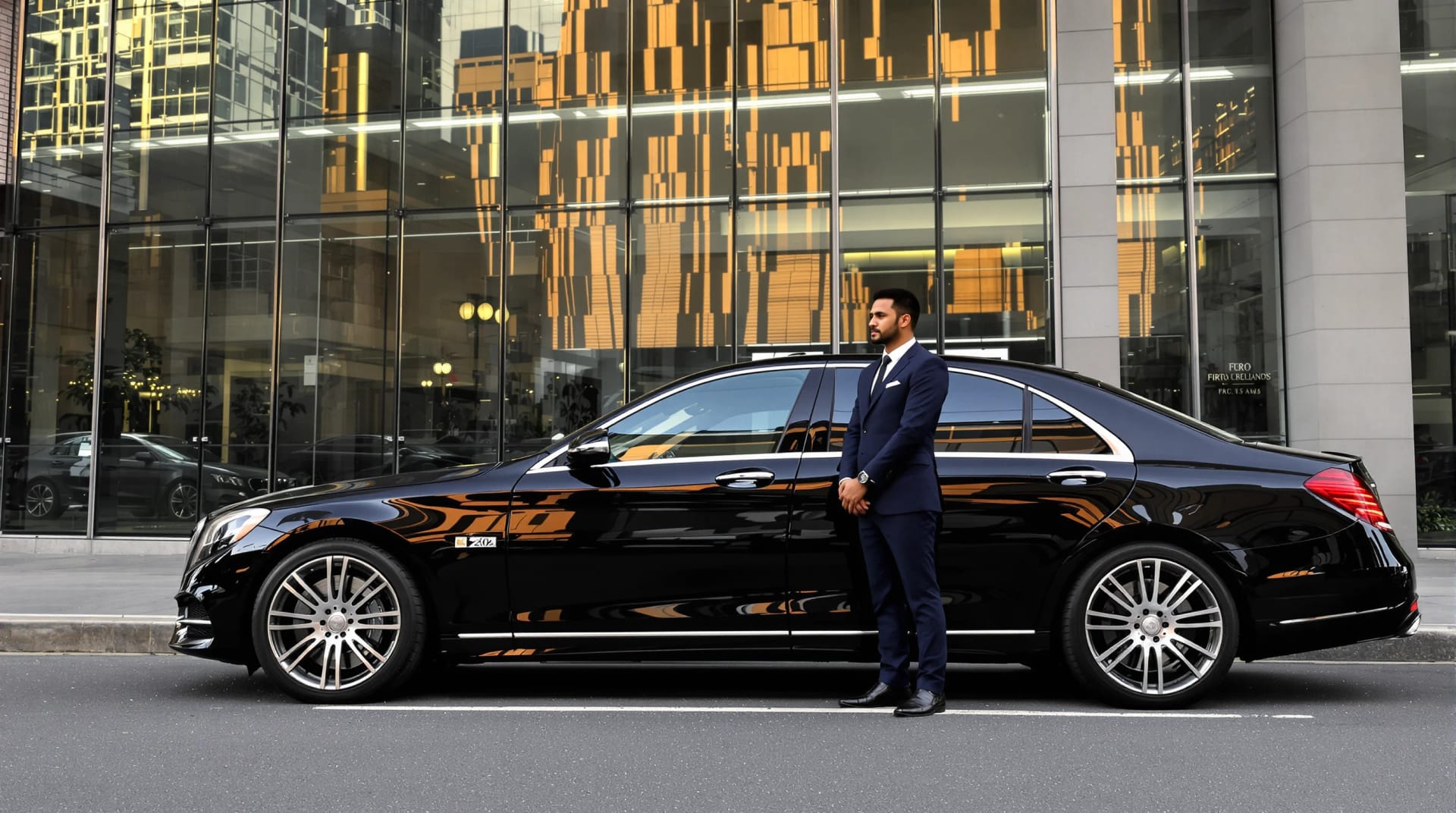
- Luxury executive sedan with security-trained driver
- Route reconnaissance and travel planning
- Pre-trip intelligence briefing
- Hotel security coordination
- 24/7 operations support
Comprehensive Protection
- Close protection team with military-trained specialists
- Armored SUV or sedan (Level III-A Ballistic Protection)
- Secure hotel suite with advance sweep
- Event security coordination
- Emergency response planning
High-Complexity
- Multi-vehicle close protection teams
- Counter-surveillance and technical sweeps
- Secure air travel coordination
- VIP luxury experience facilitation services
- Medical and evacuation support
Case Studies: When Protection Makes the Difference
Documented examples demonstrate why proactive security planning beats reactive crisis mitigation:
Case 1: Tech Executive 12-Hour Kidnapping (São Paulo, 2024)
- •Victim: VP at U.S. software company visiting for investor meetings
- •Incident: Kidnapped on airport run, forced to transfer $47,000 via PIX
- •Total cost: $2.1M (ransom + recovery + business downtime + reputation damage)
- •Outcome: Had professional protection ($4,500/day × 3 days = $13,500) been employed, incident likely prevented
Case 2: Dating App Scam (Rio de Janeiro, 2024)
- •Victim: Entrepreneur visiting Rio Carnival
- •Incident: Tinder date → Lapa bar → $12,000 forced bill with threats
- •Outcome: Victim paid; no criminal arrests; U.S. Consulate logged 40+ similar cases in 2024
Decision Guide: Do You Need Professional Protection?
Complete this self-assessment to evaluate your risk level
Assign 1 point for each statement that applies to you:
- My trip includes 7+ day stays or frequent return visits to Brazil
- I hold a C-suite executive title or senior position at a known company
- My net worth exceeds $10M or I'm a Fortune 500 board member
- My trip includes multiple external engagements or public exposure
- I'll be staying or traveling after 8PM in urban areas
- My itinerary includes GRU or GIG airport transfers
- I have public visibility or media presence
- I'm conducting sensitive negotiations or handling high-value assets
- I'm traveling with family members or spouse
- I have prior Brazil visits (predictable patterns increase risk)
Planning tip: To ensure optimal security, start planning early. Our 90-day trip planning framework guides you through advance security coordination and logistics preparation.
Score Interpretation:
- 0-2 points: Low Risk — Enhanced situational awareness + intelligence briefing recommended
- 3-5 points: Medium Risk — Professional protection recommended; complimentary threat assessment advised
- 6+ points: High Risk — Executive protection strongly advised; comprehensive security planning required
Cost-Benefit Analysis: Protection vs. Incident Response
Why proactive security is cheaper than reactive crisis mitigation
Professional Protection (Proactive)
Average Incident Cost (Reactive)
- Average ransom: $2.0M
- Recovery/investigation: $2.73M
- Business downtime: $500K-1M
- Reputation damage: Unquantifiable
- Total average cost: $4.73M+
Clear ROI: Investing in professional protection costs 0.5-2.2% of average incident cost. For high-value travelers, the question isn't whether you can afford protection—it's whether you can afford not to have it.
The Vanguard Attaché Difference: Secure Luxury Access Operator
We're not a traditional security firm—we created a new category
Vanguard Attaché is Brazil's Secure Luxury Access Operator. We combine world-class executive protection with insider luxury experience facilitation, enabling you to experience Brazil with total freedom and complete peace of mind.
Traditional Security Firms
Keep you safe but constrained
Vanguard Attaché
Keep you safe AND unlock Brazil's finest
- Close protection to a U.S.-government-informed standard, staffed by former BOPE and elite-unit operators
- Premium restaurant reservations (D.O.M., Maní, Fasano)
- VIP event access (F1, Rock in Rio, Carnival)
- Private cultural experiences with security clearance
- Bilingual teams (English/Portuguese) with 15+ years local expertise
Conclusion: Making the Right Decision for Your Brazil Trip
The question "Do I need security in Brazil?" has no universal answer. For routine executives with low-risk itineraries, enhanced situational awareness may suffice. For C-suite leaders, HNW families, or anyone with public exposure, professional protection isn't luxury—it's quantifiable risk management.
The average incident cost of $4.73M versus professional protection at $3,500-15,000/day makes the math clear: investing in proactive security costs 0.5-2.2% of reactive response cost. More importantly, professional protection expands your Brazil experience rather than limiting it—unlocking access to experiences you couldn't safely or easily arrange independently.
Ready to plan your secure Brazil trip? We offer complimentary threat assessments to help you evaluate your specific risk profile and recommend appropriate security measures. Contact us for your confidential consultation.
Related Resources
Explore additional content to deepen your Brazil security understanding
Ready for Your Safe Brazil Trip?
Get personalized threat assessment and security coordination from our experts
Sources cited
- Fórum Brasileiro de Segurança Pública (FBSP) — Anuário Brasileiro de Segurança Pública (homicide and kidnapping data)
- Numbeo — country and city crime index rankings
- OSAC (Overseas Security Advisory Council, US Department of State) — country security reports
- US State Department — Brazil Travel Advisory (Level 2: Exercise Increased Caution)
- IBGE — Brazilian Institute of Geography and Statistics (demographic and statistical data)
- Ministério da Justiça e Segurança Pública — official Brazilian public-security statistics
- IBM — Cost of a Data Breach Report (security incident cost benchmarks)
- ISP-RJ (Instituto de Segurança Pública) — Rio de Janeiro crime data
- UNODC — Global Study on Homicide (Latin America regional rates)
- World Bank — development and security indicators
Frequently Asked Questions
Investment varies based on protection level, trip duration, vehicle requirements, and threat complexity. Essential Protection (luxury sedan with security-trained driver + intelligence briefing) ranges $3,500-5,500/day. Comprehensive Protection (close protection team + armored vehicle + event security coordination) ranges $6,500-9,500/day. High-Complexity (multi-vehicle teams + counter-surveillance + secure air travel coordination) starts at $10,000+/day. Rather than post generic rates that don't reflect your specific needs, we provide complimentary threat assessments and customized proposals. Most corporate clients find our services represent 2-5% of their total Brazil travel budget.
Armored vehicles are recommended for high-risk scenarios: downtown travel after 8PM, airport transfers (especially GRU in São Paulo), routes through elevated-risk areas, and high-profile executives with public visibility. For daytime business meetings in secure districts like Faria Lima (São Paulo) or Leblon (Rio), luxury executive sedans with security-trained drivers are typically sufficient. We conduct individual threat assessments rather than one-size-fits-all recommendations. Armored vehicle options include Level III-A ballistic protection in Mercedes, BMW, or Toyota Land Cruiser platforms. Brazil has 160,000 armored vehicles—more than any country—demonstrating that professional protection is normalized, not exceptional.
For emergency situations in São Paulo, Rio, or Brasília, we can deploy within 4 hours. Standard arrangements typically deploy within 12-24 hours. For optimal team selection and advance planning (including venue access coordination and VIP facilitation), we recommend 2-4 weeks notice. Our 24/7 operations center ensures phone response under 4 minutes and rapid deployment for urgent security needs while providing thorough preparation for planned trips.
Yes, we have elite female close protection specialists on our teams. Female agents are often preferred for female executives, family protection, and situations requiring sophisticated discretion. Our female specialists have Brazilian military, law enforcement, or international executive protection backgrounds, with full certifications in close protection protocols. They blend seamlessly into luxury environments while maintaining advanced security capabilities. This capability differentiates us from traditional security firms focused solely on masculinity.
We maintain dedicated operating coverage with rapid response capability in São Paulo, Rio de Janeiro, Brasília, and Salvador. AI-concierge response within minutes, 24/7; consultation callback within 1 business day. Emergency deployment coordination within 4 hours in major cities. We also regularly operate in Belo Horizonte, Porto Alegre, Recife, Fortaleza, and Florianópolis. For special events or remote locations, standard deployment takes 12-24 hours. Our Brazil-exclusive focus means deeper local expertise than international firms operating in 50+ countries.
We created a new category: Protected Luxury Access. Traditional security firms keep you safe but constrained; luxury concierges provide experiences but lack security expertise. We bridge both worlds. We pair U.S.-government-standard protective leadership with details we command—staffed by former Brazilian elite-unit (BOPE, COT) operators under our PF-authorized partner—and luxury hospitality service standards. We don't just protect you—we unlock Brazil. Whether it's securing premium restaurant reservations, coordinating event access, or facilitating cultural experiences, protection expands your world rather than limits it. We're 100% Brazil-focused, not global generalists, with 15+ years of local relationships.
We leverage 15+ years of local relationships to coordinate access to Brazil's finest experiences. This includes premium restaurant reservations (D.O.M., Maní, Fasano), VIP event access (F1, Rock in Rio, Carnival), private cultural experiences, and insider opportunities requiring both social connections and security clearance. We're transparent: we facilitate and coordinate but cannot guarantee entry to fully booked venues. These services work best with 2-4 weeks advance notice and carry additional fees beyond base security pricing. We always provide realistic expectations during consultation.
We provide comprehensive Secure Luxury Access services combining elite protection with VIP facilitation. Core services include: professional close protection, secure transportation (executive sedans and armored vehicles), event security coordination, risk assessment, and travel planning. Beyond traditional security, we facilitate access to Brazil's finest experiences—premium restaurant reservations, exclusive event coordination, cultural immersions—all while maintaining your safety. We operate throughout Brazil with dedicated operating coverage in São Paulo, Rio de Janeiro, Brasília, and Salvador.
Yes, international executives represent the majority of our clients. We specialize in serving Fortune 500 executives, diplomats, celebrities, and high-net-worth individuals experiencing Brazil. Our bilingual teams understand both international corporate protocols and Brazilian cultural dynamics—we're cultural translators, not just security providers. Services include pre-trip threat briefings, secure accommodations coordination, executive transportation, meeting security, and access to experiences you couldn't safely or easily arrange independently.
Step 1: Initial contact via our website, email, or 24/7 phone (15 minutes) for brief overview. Step 2: Complimentary threat assessment call (30-60 minutes) reviewing your itinerary, threat profile, and security needs. Step 3: Customized proposal with service recommendations and pricing (delivered within 24 hours). Step 4: Pre-trip planning (1-2 weeks before arrival) including team assignment, route reconnaissance, and communication protocols. Step 5: Seamless execution during your trip with 24/7 support. Total timeline: 2-4 weeks for standard trips, 48-72 hours for emergencies.
Brazil's homicide rate dropped to 18.21 per 100,000 residents in 2023—the lowest since 2013—representing a 37% improvement from 2017's peak of 30.8/100K. However, this national progress masks significant geographic variation. São Paulo registers Crime Index of 59.7 (moderate-high), Rio de Janeiro 77.68 (high), while Brasília remains moderate. More importantly, crime types have evolved: express kidnappings now use PIX (91%), dating app scams emerged as primary threat for travelers, and even 5-star hotels have reported incidents. Perception of insecurity has risen despite improving statistics—2 in 3 Brazilians fear walking alone at night.
Most common risks for travelers have evolved significantly in 2025-2026. PIX express kidnapping (91% of cases now use smartphone instant transfers), dating app scams (40+ tracked U.S. citizen cases in Rio alone in 2024), luxury hotel robberies (even 5-star hotels like Copacabana Palace have reported incidents), and airport transfers (especially GRU in São Paulo through varied areas). Opportunistic theft in tourist areas (Copacabana, Ipanema) remains common but generally non-violent. For business travelers, biggest risks are: predictable itineraries (allowing surveillance), after-8PM exposure in urban areas, and wealth signaling through vehicles/accommodations/behavior.
São Paulo generally presents moderate-high risk (Crime Index: 59.7) versus Rio's high (77.68), but both cities require tailored security approaches. São Paulo's Faria Lima/Jardins is relatively safe during daytime for business travelers, but GRU airport transfers (28km route through varied areas) warrant professional protection. Rio's Zona Sul (Copacabana/Ipanema/Leblon) has elevated risk even for daytime itineraries, with professional protection recommended for executives. São Paulo's express kidnappings (2,437 cases in 2023) exceed Rio's in absolute volume. The real answer: your safety depends less on the city and more on your profile, itinerary, and protection measures.
Consider professional protection if any apply: (1) C-suite executive title or senior position, (2) Net worth exceeding $10M or Fortune 500 board member, (3) Extended stays (7+ days) or frequent return visits, (4) Multiple external engagements or public exposure, (5) Travel or stays after 8PM in urban areas, (6) GRU or GIG airport transfers, (7) Public figure or media presence, (8) Sensitive negotiations or handling high-value assets, (9) Travel with family members or spouse, (10) Prior Brazil visits (predictable patterns increase risk). Use our decision guide: Score 0-2 = Low Risk, 3-5 = Medium Risk (protection recommended), 6+ = High Risk (protection strongly advised).
PIX express kidnapping evolved from traditional express kidnapping: criminals now force victims to transfer funds instantly via Brazil's PIX app instead of ATM trips. 91% of express kidnappings now use PIX, with victims held average 4.2 hours until transfers process. São Paulo reported 2,437 cases in 2023 (89% resolved in <6 hours). Prevention: (1) Use secure transportation (especially airport transfers), (2) Avoid predictable itineraries, (3) Don't signal wealth through jewelry/watches/behavior, (4) Never accept rides from strangers, (5) Employ professional protection for high-risk profiles. If victimized: Comply, transfer funds as required, memorize details for police report.
São Paulo: Faria Lima/Jardins/Vila Olímpia are relatively safe for daytime business travelers, with luxury hotels (Fasano, Unique, Rosewood) maintaining private security. However, even these districts require heightened evening attention. Avoid Centro (especially after 8PM) and peripheral neighborhoods without professional protection. Rio de Janeiro: Zona Sul (Leblon/Ipanema/Copacabana) has elevated risk despite luxury status—even 5-star hotels (Copacabana Palace, Fasano) have reported incidents. Leblon is generally safer than Copacabana. Avoid Lapa, Centro, and Santa Teresa at night without protection. Important: "Safe neighborhoods" is misleading—your profile and behavior matter more than location.
Dating app scams emerged as a primary threat in 2024, with 40+ tracked U.S. citizen cases in Rio alone. Typical scam: (1) Tinder/Bumble match with attractive profile, (2) Date at bar/restaurant, (3) Match's "friends" appear unexpectedly, (4) Group orders expensive drinks/food, (5) $5,000-15,000 bill presented with threats if refuse payment, (6) Victim pays; no criminal arrests. Variations include drugged drinks for hotel robbery. Prevention: (1) Avoid dating apps entirely during Brazil travel, (2) If using, meet only at secure hotel/public areas, (3) Never go to match's "favorite bar," (4) Inform hotel concierge of plans, (5) Keep reasonable credit card limits.
Yes, but coverage varies significantly. Kidnap and Ransom (K&R) insurance covers kidnapping negotiations, ransom payments, and crisis response—premiums typically $5,000-15,000 for $5M coverage for Brazil travel. Executive travel policies may include emergency evacuation, medical expenses, and trip delay, but often exclude intentional theft or kidnapping. Important: Insurance covers financial costs, not psychological trauma, business downtime, or reputation damage. Our data shows average total incident cost ($4.73M) far exceeds standard insurance limits. Proactive protection ($3,500-15,000/day) remains cheaper than relying on insurance for reactive response.
Group travel generally reduces risk through safety in numbers, but introduces coordination complexities. Solo travelers face elevated risk of opportunistic attacks, but have more flexible itineraries for security measures. Recommendations: (1) High-risk solo travelers (C-suite executives, HNW, public figures) should always employ professional protection rather than rely on colleagues for security, (2) Group travel requires coordinated security planning (don't assume "someone" is handling it), (3) Executive teams traveling together create single high-value target—consider separating travel or comprehensive protection, (4) Family travel requires specialized protection suitable for children/spouses. Our assessment: traveling with colleagues helps, but doesn't substitute professional protection for high-risk profiles.
The U.S. State Department maintains Level 2 Advisory for Brazil (Exercise Increased Caution) as of 2026, citing crime and civil unrest. The advisory highlights: (1) Violent crime (armed robbery, carjacking, express kidnapping) common in urban areas, (2) Avoid using smartphones/jewelry in public spaces, (3) Use only certified taxis/rideshare services, (4) Don't resist robbery attempts, (5) Be vigilant on airport transfers. U.S. Consulate in Rio logged 40+ dating app scam cases in 2024. Important: Level 2 advisories don't prohibit travel but recommend increased vigilance—standard for most Latin American countries. Our advice: use advisories as starting point, not final decision—personalized threat assessments provide more precise guidance.
Brazil ranks mid-tier among Latin American peers. Homicide rate (18.21/100K) is lower than Mexico (28.2), Colombia (25.3), and Venezuela (36.7), but higher than Chile (3.7), Argentina (5.3), and Uruguay (8.5). Brazil's unique characteristics: (1) World leader in armored vehicles (160,000) indicates normalization of professional protection, (2) Sophisticated crime evolution (PIX, dating apps) specifically targets wealthy travelers, (3) Extreme geographic variation (Brasília vs. Rio vs. São Paulo require different approaches), (4) Robust professional security infrastructure (more EP firms per capita than Mexico/Argentina). Conclusion: Brazil isn't inherently more dangerous than comparables, but high-value travelers face specific risks requiring specialized protection.
Essential pre-trip preparations: (1) Threat Assessment: Schedule complimentary assessment to evaluate your specific risk profile, (2) Intelligence Briefing: Receive up-to-date crime reports for specific cities/neighborhoods, (3) Itinerary Planning: Share travel schedule with security team for route reconnaissance, (4) Communication Planning: Set up regular check-in protocols with home office/family, (5) Financial Preparations: Establish reasonable credit card limits ($5K-10K) to limit scam exposure, set up separate PIX/bank account with limited funds, (6) Insurance Preparations: Verify executive travel insurance coverage for evacuation/medical emergencies, (7) Security Awareness Training: Learn basic counter-surveillance techniques and situational awareness orientation. Timeline: Begin 2-4 weeks before departure for optimal preparation.