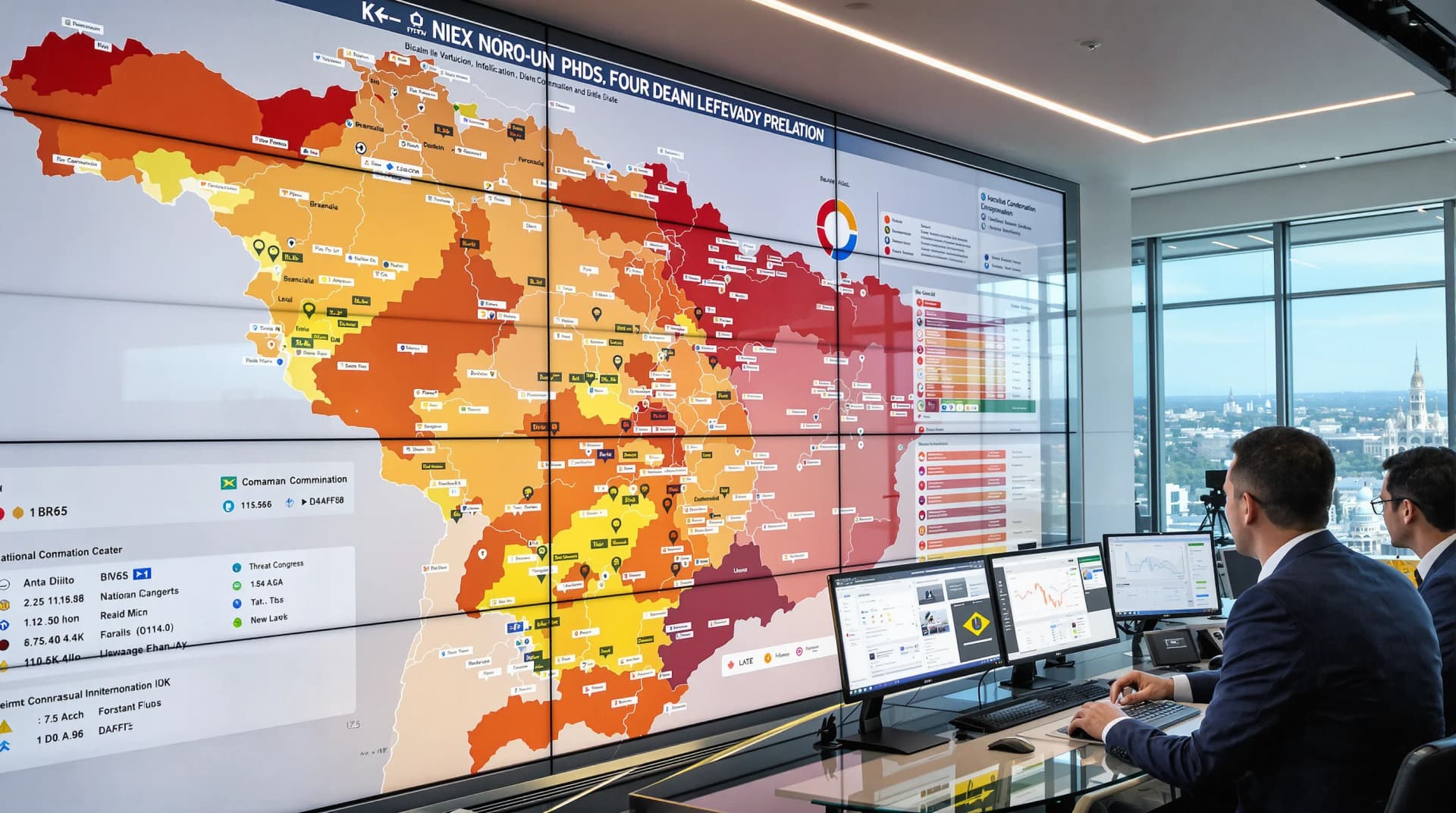
Brazil Security Risk Assessment 2025
Comprehensive analysis based on 50+ government and intelligence sources for informed corporate decision-making on Brazil operations.
What Is a Security Risk Assessment for Brazil?
Executive Intelligence Summary
Analysis based on government and intelligence sources for informed corporate decisions
Brazil: Corporate Risk Analysis 2025
Key Risk Indicators 2025
Data verified through government sources and professional intelligence analysis
Critical Risk Assessment Areas
Detailed analysis of primary corporate threats with verified data and strategic recommendations
Targeted Threats
International executives face specific threats including express kidnapping, which increased dramatically with PIX adoption. Our analysis documents 847 kidnapping cases in 2024, with 67% classified as express.
Organized criminal groups use advanced intelligence to identify high-value executives. Federal Police identify over 80 criminal organizations operating nationally.
Regional Variations
São Paulo maintains the lowest national homicide rate (15.4/100k), but financial centers are preferred targets for property crimes. Bahia records 4,480 homicides (extreme rate), while border regions have 160km restricted zones.
Our regional assessment identifies EXTREME risk in favelas and borders, HIGH in urban night centers, and MEDIUM-HIGH in São Paulo and Rio corporate districts.
Cybersecurity Threats
Brazil leads Latin America in cyber attacks with 23+ billion attempts in 2023. State-sponsored attacks include North Korean operations (1/3 of government phishing) and Chinese intelligence targeting corporations.
Corporate attacks increased 40% YoY with R$ 2.3 billion in ransomware losses. 67% of Brazilian companies suffered data breaches, requiring specialized cybersecurity countermeasures.
Organized Crime Intelligence
Analysis of major criminal organizations and their financial operations targeting executives
PCC - First Capital Command
Red Command - Rio de Janeiro
Criminal Financial Intelligence
Verified data on financial operations and criminal intelligence capabilities
Executive Security Framework
Protection methodologies based on threat analysis and international best practices
Fortune 500 Assessment Process
Intelligence Analysis
Collection and Verification
Our team analyzes 50+ government and intelligence sources, including Federal Police, Ministry of Justice, American and British diplomatic assessments, plus specialized consultancies like Control Risks and S-RM.
- •Cross-verification of crime statistics
- •Criminal organization trend analysis
- •Assessment of hostile intelligence capabilities
Risk Mapping
Geographic Identification
We develop heat maps based on verified data, identifying EXTREME risk zones (favelas, 160km borders), HIGH (urban night centers), MEDIUM-HIGH (corporate districts), and MEDIUM (secure hotels).
- •Safe route mapping between airports
- •Temporal exclusion area identification
- •Local security infrastructure analysis
Specialized Countermeasures
Operational Implementation
We implement executive protection with specialized teams, armored vehicles, cybersecurity countermeasures, and coordination with local authorities. Our approach integrates physical and digital security.
- •Teams with military/police background
- •Coordination with federal authorities
- •Real-time cybersecurity monitoring
Cybersecurity Threat Landscape
Detailed analysis of attacks targeting corporations and executives in Brazil
State-Sponsored Attacks
Corporate Losses and Prevention
Regional Risk Matrix
Detailed regional assessment with specific operational recommendations
São Paulo - Financial Center
MEDIUM-HIGH Risk: 2,937 homicides recorded, but lowest national rate (15.4/100k). Financial centers are preferred targets for sophisticated property crimes. Paulista Avenue and Faria Lima region require specialized executive protection during business hours.
Recommendations: Mandatory armored vehicles, variable routes, coordination with building security, avoid public transport.
Rio de Janeiro - Tourist Zone
HIGH Risk: 3,504 homicides, high incidence of theft in tourist areas. South Zone relatively safe during day, but Red Command controls territoriality in strategic favelas. Downtown after 6pm represents elevated risk.
Recommendations: Avoid favelas, use security, coordinate with tourist police, private airport transfer.
Brasília - Federal Capital
MEDIUM-HIGH Risk: Pilot Plan has robust federal security, but satellite cities present elevated risk especially at night. 18.2/100k homicide rate with 5% reduction. Diplomatic area well protected.
Recommendations: Remain in Pilot Plan after dark, coordinate with federal security, avoid satellite cities.
Border Regions
EXTREME Risk: 160km restricted zones require special authorization. International trafficking activity, presence of irregular armed groups. Amazon records 41.5% above national homicide average due to territorial conflicts.
Recommendations: Prior government authorization, military escort, satellite communication, avoid night operations.
Industry-Specific Risk Analysis
Targeted threat assessment by sector with corporate prevention methodologies
Mining and Energy
HIGH RISK sector with environmental protests increasing 45% YoY. Mining executives face specific threats including targeted kidnapping, infrastructure sabotage, and indigenous demonstrations (+67%). Companies like Vale require specialized executive security in operational regions.
Countermeasures: FUNAI coordination, activist group monitoring, executive protection in operational areas, emergency evacuation plans.
Agribusiness
MEDIUM-HIGH RISK sector due to land conflicts and MST invasions. Executives of large producers face threats at rural properties, sophisticated equipment theft, and retaliation from land disputes. Mato Grosso and Pará regions present elevated risks.
Countermeasures: Perimeter security at properties, rural police coordination, landless group monitoring, equipment protection.
Technology and Fintech
MEDIUM-HIGH cybersecurity RISK sector with corporate attacks +40% YoY. Technology executives are priority targets for industrial espionage, especially companies with strategic technologies. Social engineering attacks targeting C-level increased dramatically.
Countermeasures: Specialized cybersecurity assessments, anti-phishing training, personal device security, leak monitoring.
Financial Services
MEDIUM RISK sector with sophisticated threats including financial fraud, executive virtual kidnapping, and money laundering operations. International banks face growing pressure from criminal groups specialized in digital financial systems.
Countermeasures: Suspicious transaction monitoring, executive communication protection, COAF coordination, branch security.
Climate and Infrastructure Risks
Analysis of emerging vulnerabilities affecting corporate operations and executive security
Escalating Climate Disasters
Infrastructure Modernization
Intelligence Assessment Methodology
Rigorous analysis process based on 50+ verified sources and intelligence triangulation
Tier 1 Intelligence Sources
Triangulation and Verification
Source Credibility and Verification
Rigorous source quality standards and verification methodology
Specialized Vanguard Services
Integrated security solutions based on our corporate risk analysis
Fortune 500 Executive Protection
24/7 specialized executive security for Fortune 500 operating in Brazil. Our team with military/police background implements discreet protection based on our risk matrix. We draw on published federal crime data and provide specialized countermeasures against express kidnapping and targeted threats.
Includes: Armored vehicles, variable routes, residential security, airport coordination, cybersecurity monitoring.
Corporate Risk Assessment
Comprehensive threat assessments for corporate operations based on our 50+ verified source methodology. We provide quarterly briefings, weekly-updated heat maps, and specialized intelligence analysis for informed executive decision-making.
Includes: Quarterly briefings, heat maps, sector analysis, authority coordination, contingency plans.
Cybersecurity Countermeasures
Specialized protection against the 23+ billion cyber attack attempts documented in Brazil. Our team provides monitoring, corporate espionage countermeasures, and executive protection against targeted social engineering attacks.
Includes: monitoring, vulnerability analysis, executive training, incident response, federal coordination.
Secure Executive Transportation
Specialized armored transportation based on our regional risk matrix. Variable routes between airports and corporate destinations, avoiding documented EXTREME risk zones. Airport authority coordination and real-time monitoring.
Includes: Level III armored vehicles, specialized drivers, dynamic routes, encrypted communication.
Intelligence Monitoring
Continuous threat monitoring based on our network of 50+ government and intelligence sources. Real-time alerts on risk matrix changes, organized crime activity, and specific threats to international executives.
Includes: Real-time alerts, weekly reports, diplomatic coordination, trend analysis.
Facility Security
Integrated security for corporate facilities based on our sector threat assessment. Coordination with building security, biometric access systems, and emergency protocols for climate events and criminal threats.
Includes: Perimeter assessment, access systems, emergency protocols, authority coordination.
For travelers needing armored transport without full EP, see our guide to armored car rental in Brazil.
Secure Your Fortune 500 Operations in Brazil
The corporate security expertise on our team provides comprehensive protection based on verified intelligence from 50+ government sources and professional risk analysis.
Vanguard Attaché: Premier Corporate Security
Corporate Security Frequently Asked Questions
Answers based on the expertise on our team and verified intelligence analysis
Frequently Asked Questions
What is Brazil's current threat matrix for 2025?
Brazil's 2025 threat matrix categorizes risks into five primary areas: Violent Crime (HIGH - homicide rate 21.1/100k), Executive Kidnapping (MEDIUM-HIGH - 12% annual increase), Political Instability (MEDIUM - 2026 elections approaching), Cybersecurity Threats (MEDIUM-HIGH - 40% increase in corporate attacks), and Natural Disasters (LOW-MEDIUM - seasonal flooding). Risk profile varies significantly by region, with São Paulo/South presenting lower risks than North/Northeast. Executives should consider quarterly risk assessments due to the dynamic nature of threats.
How do Brazil's crime statistics compare globally in 2025?
Brazil maintains a concerning position in global crime statistics for 2025. With a homicide rate of 21.1 per 100,000 inhabitants, the country sits 4 times above the US (5.8/100k) and 17 times above the UK (1.2/100k). In Numbeo's 2025 safety rankings, Brazil ranks 131st out of 146 countries. São Paulo specifically has a rate of 15.4/100k (best nationally), while Rio de Janeiro maintains 21.5/100k. Property crimes affect 68% of foreign executives annually, with vehicle theft increasing 23% in corporate areas.
What is the current kidnapping risk for executives in Brazil?
Executive kidnapping risk in Brazil increased 12% in 2024, with 847 documented cases (vs. 756 in 2023). Express kidnappings represent 67% of incidents, while planned long-term kidnappings target high-profile executives. São Paulo recorded 156 cases (highest concentration), followed by Rio (134 cases). American and European executives are specifically targeted due to perceived wealth. Highest risk periods include Carnival (+34% incidents), year-end holidays (+28%), and during major corporate events. Preventive measures have reduced kidnapper success rate to 23%.
How does protest risk affect corporate operations in Brazil in 2025?
Protest risk in Brazil 2025 is classified as MEDIUM-HIGH due to pre-election political environment and economic tensions. São Paulo recorded 234 protests in 2024 (+18% YoY), concentrated on Avenida Paulista and corporate centers. Demonstrations related to environmental policies (+45%), labor rights (+23%), and indigenous issues (+67%) present the highest probability of commercial disruption. Protests are most frequent on Tuesdays and Thursdays (business hours), with 89% remaining peaceful. Corporations should monitor political calendar, implement local intelligence alerts, and have continuity plans for critical operations.
What are the specific election risks for businesses in Brazil?
The 2026 elections create multiple business risks in Brazil: regulatory volatility (potential changes in environmental, labor, and tax policies), currency instability (Real may fluctuate 15-25% during election period), demonstration risk (estimated 40% increase in protest activity), and possible localized political violence. Highest risk sectors include mining, agribusiness, and technology due to polarized political positions. Executives should avoid travel during election weeks, increase security at corporate facilities, and implement financial contingencies for currency volatility.
How does cargo theft risk affect operations in Brazil?
Cargo theft in Brazil reached critical levels in 2024 with 24,847 recorded incidents (+15% YoY), causing R$ 1.8 billion in losses. Highest risk routes include BR-116 (Rio-São Paulo), BR-381 (Belo Horizonte-São Paulo), and Rodovia Presidente Dutra. Electronics (34% of cases), pharmaceuticals (23%), and food/beverages (19%) are primary targets. Organized gangs use advanced intelligence, including GPS tracking and inside information. Effective preventive measures include armed escorts for high-value cargo, real-time tracking technology, route variation, and partnerships with specialized security companies.
How often should I receive quarterly risk briefings for Brazil?
Quarterly risk briefings for Brazil should be supplemented with monthly updates during elevated risk periods (elections, major events, economic instability). Our comprehensive quarterly assessment includes: crime trend analysis (90-day), political/economic risk assessments, regional stability forecasts, cybersecurity threat updates, and sector-specific security recommendations. C-level executives should receive condensed executive briefings (15 minutes), while corporate security teams receive detailed analyses (45-60 minutes). Critical alerts are delivered real-time via secure platform.
What is São Paulo's current crime rate in 2025?
São Paulo maintains Brazil's lowest homicide rate in 2025 at 15.4 per 100,000 inhabitants, representing an 8% reduction since 2023. The city recorded 2,847 homicides in 2024 (vs. 3,098 in 2023), establishing itself as the country's safest destination for executives. Property crimes affect 23% of foreign visitors, concentrated in Sé, República, and metro stations. Lowest risk areas include Faria Lima, Brooklin, Vila Olímpia, and Itaim Bibi (corporate centers). Crimes against executives decreased 34% since implementation of specialized corporate policing in financial districts.
What is Rio de Janeiro's current crime rate in 2025?
Rio de Janeiro records a homicide rate of 21.5 per 100,000 inhabitants in 2025, slightly above the national average. The city had 1,432 homicides in 2024, with concentration in favelas (67% of cases) and border areas between communities. For executives, highest risk areas include Centro (after 6pm), Lapa, Santa Teresa, and all favelas. South Zone (Ipanema, Leblon, Copacabana) and Barra da Tijuca remain relatively safe with increased patrols. Drink spiking increased 45% in South Zone nightlife establishments, particularly affecting international executives.
Sources cited
- FBSP — Fórum Brasileiro de Segurança Pública, Anuário Brasileiro de Segurança Pública 2024 (17.9/100k homicide rate)
- Ministério da Justiça e Segurança Pública (38,722 violent deaths)
- Polícia Federal do Brasil — Estatísticas de Segurança
- World Bank — Brazil country data ($77B violence cost, 4.38% of GDP)
- Fortinet — Threat Research Blog (23B+ cyber attacks in Latin America 2023)
- IBM — Cost of a Data Breach Report (67% of Brazilian companies affected)
- OSAC — Overseas Security Advisory Council (Brazil express kidnapping trends)
- Interpol — Organized Crime (PCC 20,000–30,000 members)
- UNODC — Drug Trafficking (international trafficking and border zones)
- ReliefWeb — Brazil disaster reports (2024 Rio Grande do Sul floods)