By Arthur HarrisFounder & Security Director

What should a principal do if caught adjacent to an off-duty PM shootout in São Paulo?

Five rules, in order: (1) Assume you cannot tell who is a police officer. (2) Move perpendicular, not parallel to the line of fire. (3) Do not film, do not narrate, do not approach. (4) Your protective driver or CP staffer makes the engagement call, not you. (5) Sit-rep within 15 minutes regardless of whether you were touched. Engagement against an off-duty PM exposes your team to radically narrower lawful options than a civilian-on-civilian scenario.

What happened

On March 28 around 15:00 BRT, an off-duty PM officer engaged a robbery suspect on Rua Sapetuba in Butantã, near USP — a daytime residential street in São Paulo’s Zona Oeste. Outcome: businessman Celso Bortolatto de Castro (58) killed; one suspect killed; second suspect fled. The official "shootout" version is contested. The victim’s wife, an eyewitness, alleges the officer fired directly and hit her husband in the back of the neck and back. Polícia Civil SP (deaths) and PM Corregedoria (officer conduct) are both investigating. Reference incident: sp-2026-03-28-0001.

The case will run its course through the investigations. The question for your team, separate from the political fight: what posture should a principal — and the protective team around them — take if they end up in physical proximity to an in-progress off-duty PM action?

The five-rule posture

Five rules. Short on purpose — memorize them, or have your detail carry them on a laminated card.

  1. Assume you cannot tell who is a police officer. Off-duty PM officers in São Paulo do not typically wear identifying clothing. The shooter, the suspect, and a bystander with a phone can look identical from 30 meters. Treating any armed engagement on a residential SP street as "civilian shooting" until proven otherwise is the safer default.
  2. Move perpendicular, not parallel. Most fatalities adjacent to street-level shootouts come from a stray round in the line of fire. Moving *away* in the direction the shooting is *facing* puts you in the worst position. The right move is to clear sideways — into a closed doorway, a cross-street, a vehicle on the opposite curb — not down the same sidewalk.
  3. Do not film. Do not narrate. Do not approach. Any of the three triggers escalation risk in the moment and legal-witness exposure after. If you witness something material, you tell our team — not Instagram, not the officer, not the bystander next to you. The footage you’d capture is not better than the footage already being captured by the multiple residents who *do* film.
  4. If you are the principal, your protective driver or CP staffer makes the call on engagement, not you. This is the one rule the principal sometimes resists. On March 28, the engaged shooter was off-duty PM — meaning your CP staffer’s lawful options if drawn into the engagement are radically narrower than they would be in a pure civilian-on-civilian scenario. The right call is almost never to engage.
  5. Sit-rep within 15 minutes, regardless of whether you were touched. Even if the principal walked through the adjacent block ten minutes after the engagement and noticed nothing, we want it logged. Adjacent-incident proximity is one of the inputs to next-day routing — and it’s one of the inputs that goes missing fastest when no one was hurt.
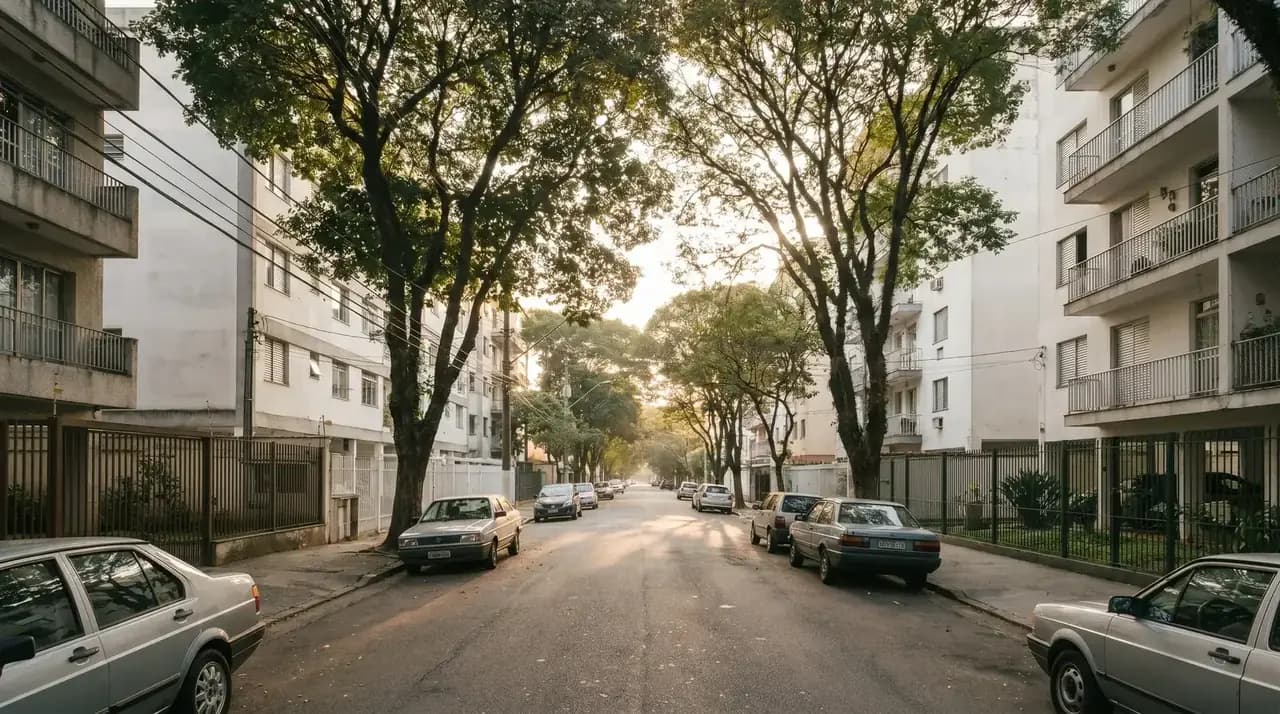
Typical daytime residential street in São Paulo Zona Oeste with mid-rises and sidewalk trees
Residential Zona Oeste — the kind of street the case happened on, not a high-risk neighborhood.

Why this case matters more than the headline statistics suggest

Butantã is a daytime Zona Oeste residential corridor near USP, not a high-risk neighborhood. SSP-SP and the SP prefeitura are simultaneously touting Q1 2026 as the lowest-robbery-and-latrocínio-on-record quarter. Both can be true. The point of writing about this incident is precisely that it’s the kind of case the headline statistics filter out: low body count, residential setting, contested-narrative, politically-load-bearing. It’s exactly the kind of case a principal in São Paulo for a Faria Lima meeting would not have been briefed on by a generic concierge.
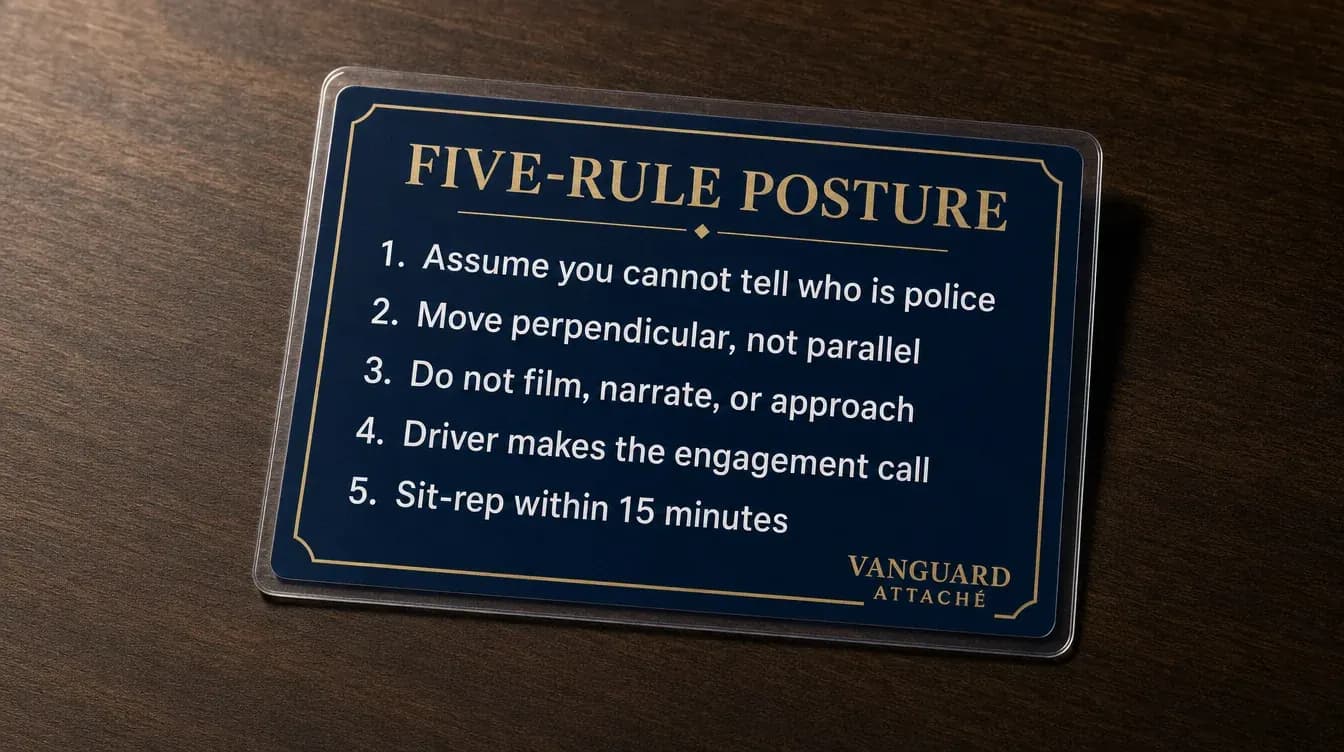
Laminated five-rule card used by Vanguard drivers and CP staff in São Paulo
Pocket-rule card — Vanguard SOP for drivers and protective staff.

What hasn’t changed about the Butantã / USP corridor

No routing change for the Butantã / USP corridor — the case does not change the area’s risk profile. What *will* shift over the coming weeks is heightened PM-on-PM scrutiny in Zona Oeste as the dual investigation runs. Your CP staff and protective driver should be instructed to not engage with or film any in-progress PM action in SP, regardless of corridor — the same rule Vanguard drivers and CP staff already follow.

Request the laminated card

If your team wants the one-page version of the five-rule posture — the laminated card Vanguard drivers and CP staff carry — reply or message us. It’s shared without a wall, no email gate.

Frequently asked questions

On March 28, 2026 around 15:00 BRT, an off-duty PM officer engaged a robbery suspect on Rua Sapetuba in Butantã, near USP. A 58-year-old businessman, Celso Bortolatto de Castro, was killed; one suspect was killed and a second fled. The official "shootout" version is contested by the victim’s wife — an eyewitness — who alleges the officer fired directly. Polícia Civil SP (deaths) and PM Corregedoria (officer conduct) are both investigating. Reference incident: sp-2026-03-28-0001.

The case will run its course through the investigations. The operational question — separate from the political fight — is what posture a principal and the protective team should take if they end up in physical proximity to an in-progress off-duty PM action. That answer does not depend on the eventual ruling. It depends on the structure of who can be holding a firearm on a residential SP street and what your CP staffer’s lawful options actually are.

Rule 1: Assume you cannot tell who is a police officer — off-duty PM officers in São Paulo do not typically wear identifying clothing. Rule 2: Move perpendicular, not parallel — clear sideways, not down the same sidewalk. Rule 3: Do not film, do not narrate, do not approach. Rule 4: Your protective driver or CP staffer makes the call on engagement, not the principal. Rule 5: Sit-rep within 15 minutes regardless of whether you were touched. Five rules. Short on purpose — memorize them, or have your detail carry them on a laminated card.

Almost never. On March 28, the engaged shooter was off-duty PM — meaning a CP staffer’s lawful options if drawn into the engagement are radically narrower than they would be in a pure civilian-on-civilian scenario. Brazilian law treats engagement against a state actor differently from engagement against a robbery suspect, even when the state actor’s conduct is itself disputed. The right operational call is to clear sideways and disengage, not to draw.

No routing change for the Butantã / USP corridor — the case does not change the area’s risk profile. Butantã remains a daytime Zona Oeste residential corridor near USP, not a high-risk neighborhood. What will shift over the coming weeks is heightened PM-on-PM scrutiny in Zona Oeste as the dual investigation runs. Your protective driver and CP staff should be instructed against engaging with or filming any in-progress PM action in São Paulo, regardless of corridor — the same rule Vanguard drivers and CP staff already follow.

No — the headline statistics show the opposite. SSP-SP and the SP prefeitura confirm Q1 2026 as the lowest robbery-and-latrocínio quarter on record. Both the record-low number and the contested Butantã case are real. The point of writing about the case is precisely that it’s the kind of low-body-count, residential, contested-narrative incident the headline stats filter out — and exactly the kind a principal in São Paulo for a Faria Lima meeting would not have been briefed on by a generic concierge.

No. Butantã remains a daytime Zona Oeste residential and university corridor, not a high-risk executive destination. The operational lesson is narrower: even normal-looking streets can produce fast, ambiguous armed encounters when off-duty police intervene in a robbery. Protective planning should not overreact by blacklisting the area; it should update bystander posture and driver instructions.

The driver or CP staffer should report the time, street or cross-street, direction of movement, whether the principal saw or heard the incident, any police presence observed, and whether the vehicle or walking route changed. The point is not paperwork. It gives the team a routing input for the next 24 hours while memory is still fresh.

Ready to Secure Your Brazil Trip?

Complete our 3-minute security assessment for a custom protection plan.

WhatsApp
    Off-duty PM intervention in Butantã: what principals do if caught adjacent | Vanguard Attaché